

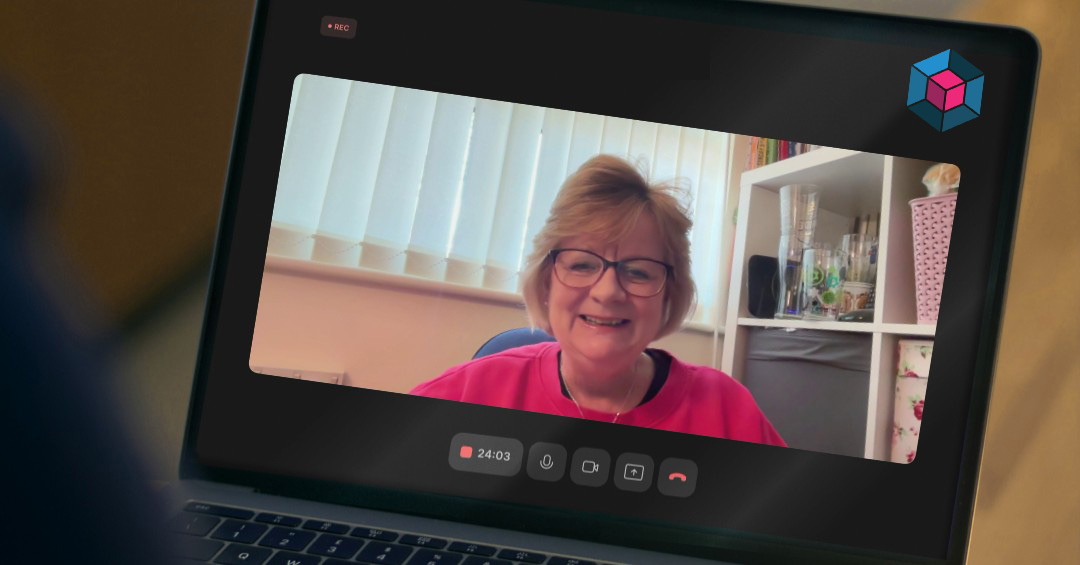
Welcome back to Humans of Autologyx, where we take a closer look at the people behind the platform, and the thinking that goes into making complex work run better.
This time, we’re speaking with Rachel Chambers, Senior Solutions Consultant, who works with clients across their entire journey with Autologyx, from initial onboarding through to evolving and expanding their use of the platform.
Her focus? Making sure what gets built actually reflects how work happens in the real world, and continues to do so as that work changes.
The real work starts early
For Rachel, some of the most important work happens before a single workflow is built.
Her role often begins with understanding how organisations operate, not just at a high level, but in the detail:
- how tasks move between people
- where decisions are made
- what assumptions sit beneath the process
Very often, those details aren’t documented anywhere. They live in people’s heads.
Uncovering what's missing
A big part of Rachel’s job is helping clients articulate things they haven’t explicitly defined.
Through workshops, process mapping, and guided conversations, she works to surface:
- hidden steps
- edge cases
- inconsistencies
- unspoken “this is just how we do it” logic
This isn’t just requirements gathering in the traditional sense. It’s about building a shared understanding of the process - something that’s essential before any automation can succeed.
From first build to ongoing evolution
Rachel’s role doesn’t stop once a solution goes live. She also works closely with existing clients to:
- introduce new workflows and capabilities
- refine and expand existing solutions
- support organisations as their processes evolve over time
This is especially important in environments like legal operations, where requirements are constantly shifting.
Rather than treating automation as a one-off project, the focus is on continuous improvement - making sure workflows keep pace with the business.
Supporting client upgrades
Another key part of Rachel’s work is helping clients transition from legacy systems to the latest version of the Autologyx platform.
This isn’t just a technical migration. It’s an opportunity to:
- revisit and improve existing processes
- redesign workflows using newer capabilities
- remove inefficiencies that may have built up over time
In practice, this often means combining migration with optimisation, ensuring clients don’t just move systems, but move forward.
Shaping the right solution
Once there’s a clear understanding of the process, the focus shifts to shaping the solution.
This is where structure starts to emerge:
- defining how the workflow should behave
- mapping out user interactions
- aligning expectations across stakeholders
Mockups, demos, and early walkthroughs play a key role here - giving clients something tangible to react to and refine.
The result is a much clearer path forward, with fewer surprises during delivery.
A collaborative way of working
Rather than treating implementation as a handover, Rachel takes a collaborative approach.
Clients are involved throughout:
- validating ideas
- refining workflows
- building confidence in the system
This not only improves the end result, but also ensures that teams feel comfortable using, and owning, what’s been built.
Designing for how work actually happens
One of the consistent challenges Rachel highlights is that real-world processes are rarely neat.
They involve:
- multiple tools and systems
- large volumes of documents
- varying levels of user experience
New capabilities, such as integrations with systems such as iManage, or more flexible file handling, are designed to support this reality.
The goal isn’t to oversimplify. It’s to create workflows that can handle complexity without breaking.
Why this matters
Rachel’s approach reinforces a core idea: you can’t build effective automation on top of an unclear process.
As organisations look to adopt more AI-driven capabilities, this becomes even more important.
AI can enhance and accelerate work, but only when it operates within a clear, structured workflow.
Without that foundation, even the most advanced tools struggle to deliver consistent results.
What stands out
From this conversation, a few things are clear:
- Clarity beats speed
- Taking the time to understand the process leads to better outcomes
- Automation is never “done”
- The most successful clients continuously evolve their workflows
- Migration is an opportunity, not just a task
- Moving to a new platform is a chance to improve, not just replicate
Watch the full conversation
🎥 Watch Rachel share her approach to onboarding, discovery, and ongoing client work below.
Humans of Autologyx
At Autologyx, we believe the future of work isn’t just AI, it’s AI embedded inside well-designed, deterministic workflows.
The people in this series are the ones turning that vision into reality